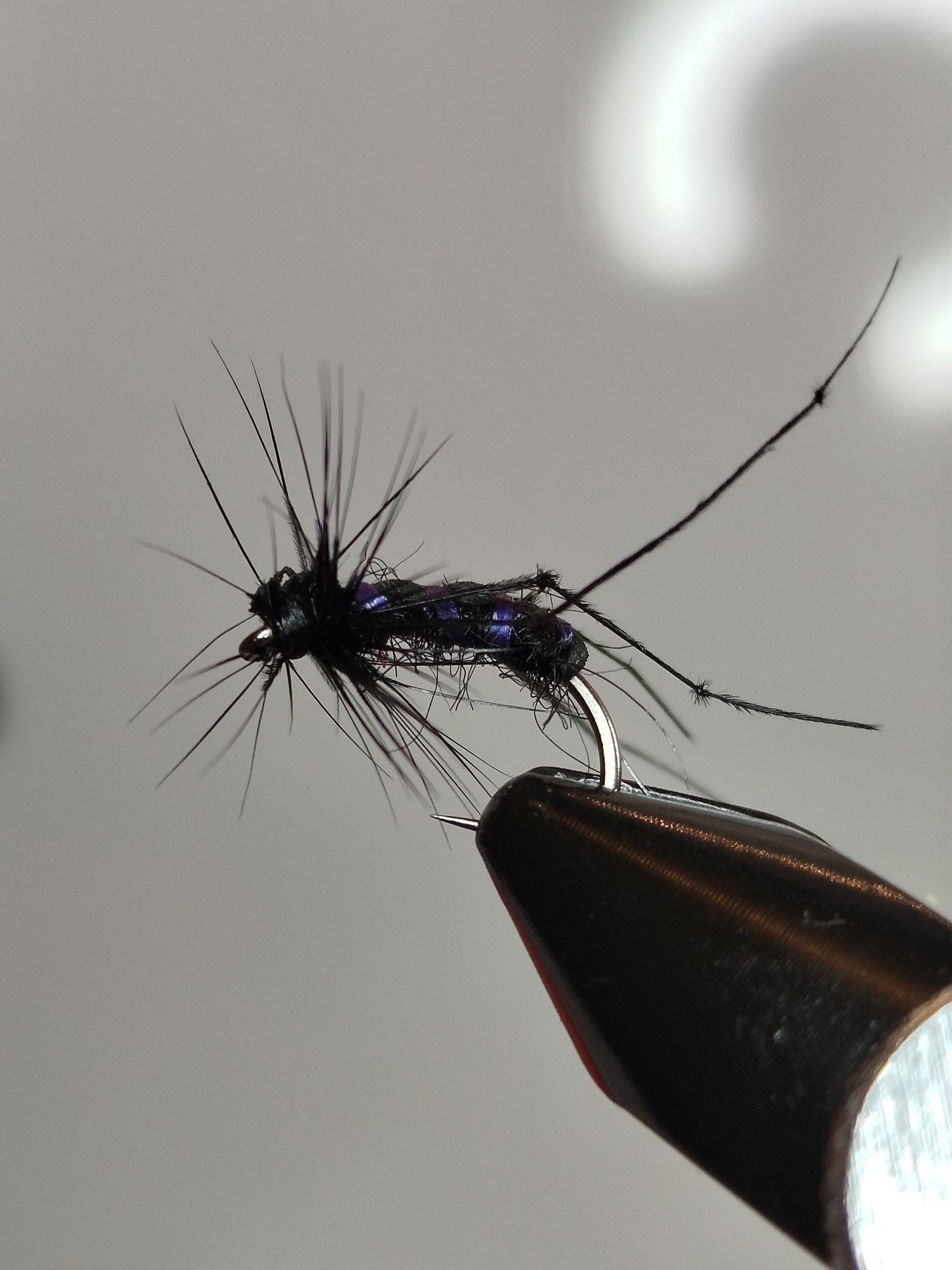

Black Hopper
Pattern Overview
The Black Hopper is a proven all-round trout pattern that excels whenever fish are feeding near the surface on small dark insects, especially when no obvious hatch is occurring.
Pattern Details
Characterised by its slim black body, ribbed profile, knotted legs, and soft hackle, the Black Hopper creates a lifelike silhouette that trout find difficult to ignore. Its greatest strength is adaptability. The fly can be presented dry, fished in the surface film, or allowed to sit just below the surface, making it effective across a variety of conditions and water types.
The pattern excels when trout are feeding near the surface but are not focused on a specific hatch. The Black Hopper consistently produces results. It is particularly effective during warm weather midge hatches, hawthorn falls, and periods when terrestrial insects are being blown onto the water.
For anglers looking for a reliable searching pattern that works throughout the season, the Black Hopper remains one of the most dependable and productive flies ever developed. Its simplicity, versatility, and proven fish-catching ability make it a pattern no trout angler should be without.
Tying Materials
- Hook Size: 10-14 dry fly hook
- Thread: Black
- Body: Black dubbing/foam strip along the back.
- Ribbing: Blue flexifloss
- Legs: Knotted pheasant tail
- Hackle: Black cock
Pattern Gallery
Target Species
Brown Trout
Rainbow Trout
Best Seasons & Conditions
Warm summer days. Light to moderate breeze. When hawthorn or terrestrial flies are on the water. An excellent pattern for Midge hatches trough the summer.
Water Types
The Black Hopper is particularly effective on lochs, reservoirs, where trout are feeding close to the surface. It excels whenever fish are cruising just beneath the surface film.
Presentation & Retrieval Tips
Fish it static on a floating line. Add occasional twitches to imitate a struggling insect. Retrieve slowly when searching for active fish. Fish it semi submerged when trout are feeding just under the surface.