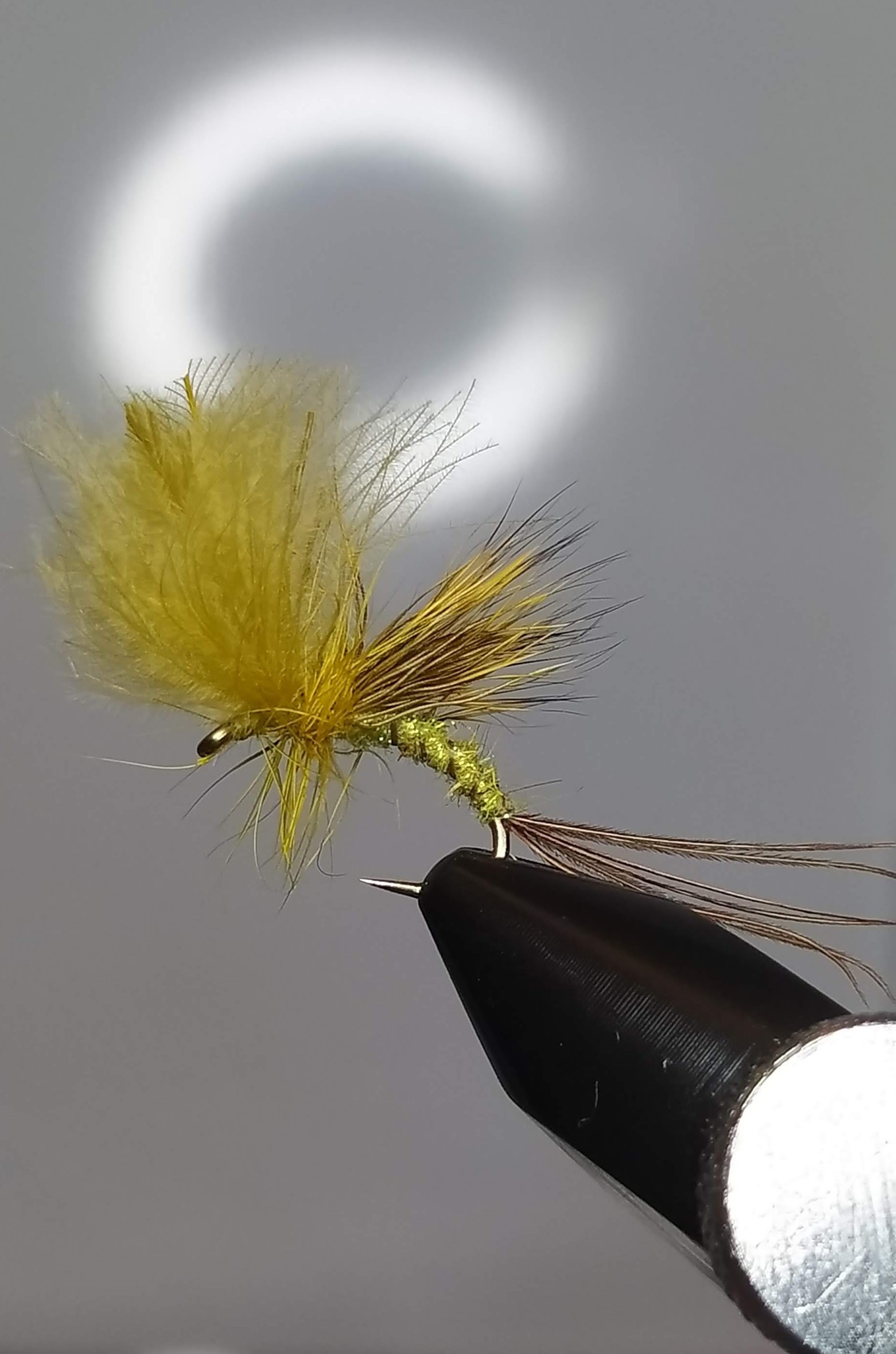

Mayfly
Pattern Overview
When most anglers picture a mayfly hatch, they’re thinking of the dun stage that magical moment when freshly emerged mayflies sit on the surface with their upright wings, drifting like tiny sailboats. It’s one of the most iconic sights in fly fishing, and matching it well can turn a session into one you’ll remember for years. Scottish Stillwater Fly Fishing During a Mayfly Hatch
Mayfly Dun patterns imitate this exact moment. They’re delicate, low riding dry flies designed to fool trout during a hatch, when fish often become selective and suspicious. Getting the silhouette right matters more than anything else.
Pattern Details
Designed to imitate the newly emerged adult mayfly as it sits on the water with its wings held upright. These flies float flush in the surface film, presenting the slim abdomen, splayed tails, and tall, sail like wings that characterise real duns. Because natural duns drift for several seconds while their wings dry, trout have time to inspect them making accuracy in silhouette and posture essential.
Tying Materials
- Hook Size: 10 grub hook
- Thread: Olive
- Tail: Pheasant tail fibres
- Body: Olive hare’s ice dubbing
- Ribbing: Brown tread
- Hackle: Olive cock
- Wing: CDC and olive deer hair
Pattern Gallery

Target Species
Brown Trout
Rainbow Trout
Best Seasons & Conditions
Most Scottish mayfly hatches run from late spring through summer. Mostly starting end of May through to July. Usually on warm and overcast days. hatches start usually early afternoon.
Water Types
This pattern will work on any water where mayfly are hatching.
Presentation & Retrieval Tips
Keep the fly flush in the film don’t drown it in flotant.
On lochs, try a slow figure of eight retrieve to mimic a struggling dun.
I would also have on my cast:Olive Emerger Pattern: Tying Materials, Seasons and Tactics