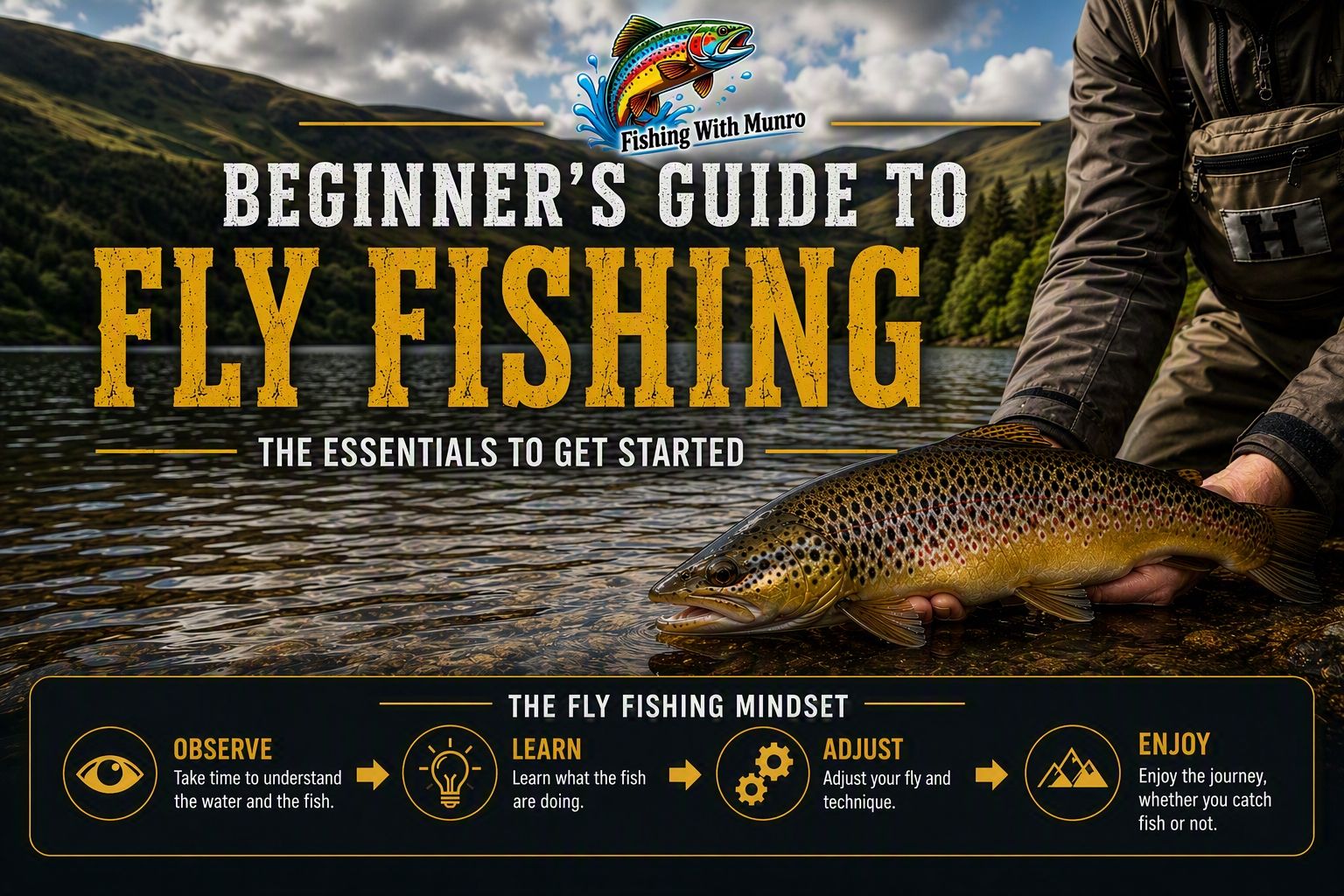
The Beginner’s Joy of Fly Fishing: Slow Down, Read the Water, and Catch Your First Trout
There’s a moment every new fly angler remembers, and mine is still clear as day. I was standing beside a Shetland loch with the wind coming down across the loch holding a rod that felt far too long and watching my fly line do everything except what I wanted. My dad made it look calm and effortless about 25 yards away, while I was wondering how something so simple could feel so awkward in my own hands.
That is why I wanted to write this guide. If you’re looking for beginner fly fishing tips, this is the sort of advice I wish someone had put in front of me at the start: not a technical lecture, not a shopping list dressed up as wisdom, but honest, plain speaking help on simple gear, basic casting, fly choice, loch fishing tactics, and learning to read the water before worrying about getting everything perfect.
Begin With Patience, Not Perfection
Fly fishing has a way of humbling everyone. The first casts are rarely pretty. The line catches the grass behind you. The leader lands in a heap. The fly goes nowhere near where you hoped it would. That’s normal.
The mistake beginners make is thinking they need to master everything at once. They don’t. At the start, your job is simple: slow down, watch what’s happening, and enjoy being there. The loch will teach you more than any catalogue ever will.
Forget trying to look like an expert. Good anglers are curious anglers. They notice the ripple, the wind lane, the birds working over the surface, the tiny rise that gives away a feeding trout. This habit matters far more than having the flashiest gear on the bank.
If you bring patience to the water, you’re already fishing properly.
Keep Your First Fly Fishing Setup Simple
It’s easy to get buried under opinions about rods, reels, lines, leaders, and flies. My advice is this: don’t make your first setup complicated. You need reliable, balanced gear that lets you practise, present a fly cleanly, and enjoy the day.
For most beginners fishing lochs and stillwaters, this is more than enough:
- Rod: 9ft, #6 or #7 weight
- Reel: anything reliable; you don’t need fancy
- Line: floating line (the easiest to learn with)
- Leader: 9ft, 6lb
- Flies: a small selection
That little setup will teach you the important lessons. You can add specialist lines, boxes of flies, and clever extras later. At the beginning, simple gear means fewer distractions and more time actually learning to fish.
Learn One Basic Fly Cast Well
There’s no need to chase fancy casting straight away. A tidy overhead cast will catch fish. A short, controlled cast presented well is far better than a long, messy one that spooks every trout in front of you.
Think of the cast as a smooth lift, a short pause, and an unhurried forward stroke. Don’t force it. Let the rod do the work. When the line straightens behind you, bring it forward and let it land. The pause is where most beginners go wrong; rush that, and everything collapses.
Practise with less line out than you think you need. Accuracy and control come before distance. On a Shetland breeze, being able to put a fly neatly into fishable water matters far more than throwing half the line across the loch.
Read the Water Before You Cast
One of the best habits you can build is to stop before you start. Stand back from the edge for a minute. Look at the surface. Feel the wind. Watch where the ripple gathers and where the calmer water is. The water is already giving you clues.
Before you cast, look for signs of life:
- ripples
- rises
- wind lanes
- birds feeding
- sheltered corners
- weedbeds
A trout rise is obvious, but the smaller clues matter too. A line of foam can collect food. A sheltered corner can hold fish on a rough day. A slight change in colour can mark a weedbed or drop off. As a beginner you often cast first and think later. Try reversing that.
Choose Flies With Confidence
Fly choice can feel like the biggest mystery in the sport. You walk into a tackle shop and it’s easy to believe you need hundreds of patterns. You don’t.
I personally would use a small box of flies and learn when to use them. A Bibio, Loch Ordie, Olive Emerger, Cormarant, Black Hopper and a Viva. Will cover a surprising amount of fishing.


Rather than asking, “What fly should I use?”, ask better questions:
- Is there a ripple or is the water flat calm?
- Are fish rising, chasing, or staying down?
- Does the fly need to make a wake, drift quietly, or sit just under the surface?
On a lively wave, traditional wets like the Bibio and Loch Ordie can work beautifully. On a calm evening, a smaller, quieter fly might be the better answer. Such as the Olive Emerger and the Black Hopper. Confidence matters. If you believe in the fly, you’ll fish it better.
Slow Your Fly Retrieve Down
Most beginners retrieve too quickly. I did it as well. There’s a nervous urge to keep the fly moving, as if stillness means nothing is happening. But trout often want rhythm, pauses, and small movements that look alive rather than rushed.
Try a few simple retrieves and pay attention to what gets interest:
- Figure of eight retrieve: slow and steady
- Short pulls: great for traditional loch flies
- Long, gentle draws: perfect for calm days
Whatever retrieve you choose, keep it deliberate. Don’t just pull line because you’re unsure what else to do. Fish the fly all the way back, especially close to the bank, because trout often follow far longer than you realise.
Learn From Every Take, Miss, and Blank
Your first proper cast. Your first rise. Your first pull that makes your hand tighten on the line. Your first fish, even if it’s no bigger than your palm. These are the moments that hook you.
But blanks teach you too. A blank day still tells you something about wind, light, depth, timing, fly choice, or approach. The anglers who improve fastest are the ones who ask, “What did the water show me today?”
Fish With Someone Better Than You
If you get the chance, spend a day beside someone who knows the water. You don’t need them to lecture you. Just watch where they stand, how often they move, how they cover water, and how they change tactics when nothing happens. My piece on mistakes What Trout Taught Me: 10 Beginner Fly Fishing Mistakes
A good angler can teach you without saying much. The little habits are often the important ones: I would be checking where the wind was pushing on the shoreline before starting, looking for any sign of fish activity, looking to see if any birds where working the water. Changing depth before changing fly.
You’ll still build your own style, and you should. But a few days with experienced anglers can save you months of guessing.
Final Thoughts on Fly Fishing for Beginners
Fly fishing isn’t really about mastering a rod, filling a box with flies, or ticking off perfect casts. It’s about building a relationship with water and being outdoors. The more time you spend watching, listening, failing, adjusting, and trying again, the more the sport opens up.
So if you’re new to it, don’t rush. Take a simple setup, pick a forgiving stretch of water, and give yourself permission to learn slowly. The first trout will come. And when it does, you’ll remember far more than the fish: you’ll remember the weather, the water, the cast, and the quiet feeling that you’ve opened a door into something much bigger.
If this helps you get started, I’d love to hear how you get on. Drop a comment on the blog, tell me about your first trout, your first blank, or the mistake that taught you the most. We all start somewhere, and half the pleasure of fly fishing is sharing what the water teaches us along the way.
Beginner Fly Fishing FAQ
What is the best fly fishing setup for beginners?
When I’m helping someone get started, I always suggest keeping it simple: a 9ft #6 or #7 rod, floating line, reliable reel, and a 9ft 6lb leader. That kind of setup is forgiving enough for loch and stillwater trout fishing, and it lets you focus on casting, presentation, and learning what the water is telling you.
Is fly fishing hard to learn?
It can feel awkward at first. I remember the line landing in a heap more often than I’d like to admit, but it does get easier. If you learn one simple cast, slow everything down, and watch the water before you cast, you’ll improve much faster than you think.
What flies should a beginner use on a loch?
I’d start with a small box of flies you can build confidence in: Bibio, Loch Ordie, Olive Emerger, Cormarant, Black Hopper and a Viva I’d rather fish a few patterns well than carry a huge box and keep second guessing every choice.
How far does a beginner need to cast?
Not nearly as far as most beginners imagine. Some of my most memorable trout have come from water close to the bank. A short, accurate cast that lands neatly will do far more for you than a long cast that collapses or crashes down.
What is the biggest mistake beginner fly fishers make?
For me, the biggest mistake is rushing. I’ve done it myself: casting too soon, retrieving too quickly, or changing flies before I’ve properly read the water. Slow down, watch what’s happening, and give each cast a reason.
Can you catch trout fly fishing from the bank?
Absolutely. I’ve had plenty of good days fishing from the bank, especially when I’ve taken time to read the wind, watch the margins, and look for fish close to the edge. Weedbeds, sheltered corners, and small signs of feeding can all make bank fishing surprisingly productive.
How to Fish Buzzers for Trout: Why Doing Less Often Catches More Fish
How to Catch Trout During Hot Weather in Scottish Reservoirs
3 responses to “A Beginner’s Guide to Fly Fishing: Slow Down, Look Closer, and Let the Loch Teach You”
[…] A Beginner’s Guide to Fly Fishing: Slow Down, Look Closer, and Let the Loch Teach You […]
[…] A Beginner’s Guide to Fly Fishing: Slow Down, Look Closer, and Let the Loch Teach You […]
[…] A Beginner’s Guide to Fly Fishing: Slow Down, Look Closer, and Let the Loch Teach You […]