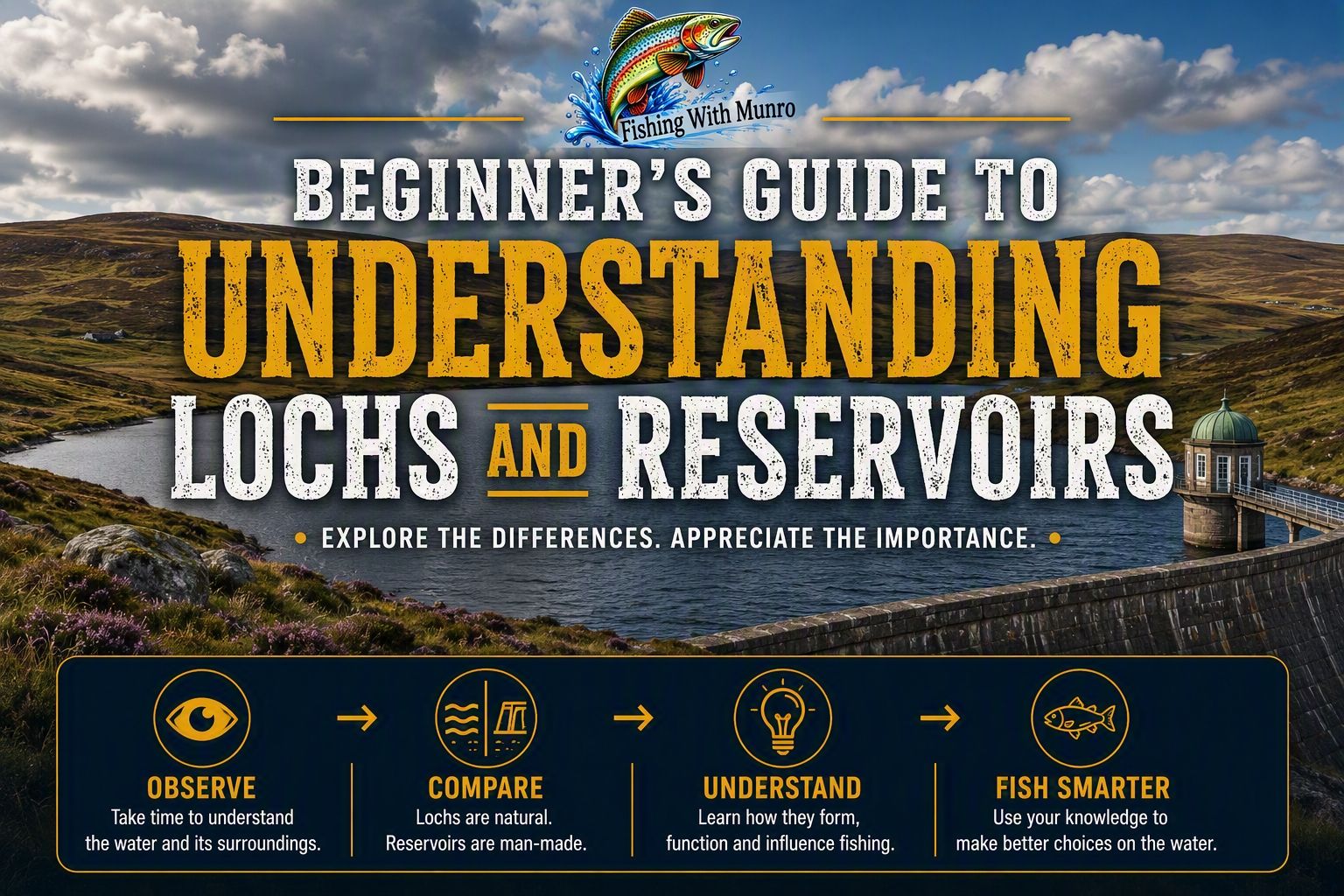
The first time I stepped from a wild Shetland loch onto the bank of a managed reservoir, it felt like the same sport in a completely different world. The rod, line and flies may be familiar, but the water asked different questions: where are the fish, how are they moving, what depth are they holding, and how much does the wind matter today?
For years, my own fishing was shaped almost entirely by wild lochs, so reservoir fishing was the missing piece I had yet to understand.
It wasn’t until I moved to Edinburgh that I cast a line on a reservoir for the first time. Like many anglers raised on wild lochs, I assumed the skills would transfer seamlessly. While the fundamentals remained the same, I quickly discovered that reservoirs present a different challenge. The scale, the stocking policies, the fish behaviour, and even the way anglers approach the water can be very different from what I had known growing up in Shetland.
This beginner’s guide to loch vs reservoir fly fishing is for anyone starting their stillwater journey, whether casting across a remote Highland loch or learning the ropes on a busy reservoir near a city. I will share the lessons I have learned from both worlds and explain the key differences every beginner should understand.
I also have this post for beginner’s A Beginner’s Guide to Fly Fishing: Slow Down, Look Closer, and Let the Loch Teach You
Quick Comparison: Lochs vs Reservoirs
Before getting into the detail, this quick side by side comparison shows the main differences beginner fly anglers are likely to notice.
| Feature | Natural Loch | Managed Reservoir |
| Fish behaviour | Often wild trout shaped by natural food, structure and conditions. | May include stocked fish that move more widely and respond to recent introductions. |
| Where to start | Look for bays, points, weed, stones, islands and burn mouths. | Watch wind direction, depth, stocking areas, pressure and moving fish. |
| Beginner challenge | Learning to read natural water and notice subtle signs. | Adapting quickly when fish are moving or holding at different depths. |
| Best mindset | Slow down, observe the water, and work likely features carefully. | Stay mobile, change depth, and respond to what the fish are doing on the day. |
For me, the biggest lesson was realising that a reservoir is not simply a bigger loch. It asks you to think differently about depth, movement and where trout might be feeding on the day.
Natural Lochs vs Managed Reservoirs
A loch is a natural body of water. The banks, bays, shelves, islands and depths have been shaped by the landscape over time. In places like Shetland, many lochs have a raw, open feel to them. They are part of the land around them, and the trout living there have usually adapted to that specific environment over generations.
A reservoir is different. It has been built to store water, and although many reservoirs become rich habitats in their own right, they are often more actively managed. Water levels may rise and fall. Banks can be steeper. Fish stocks may be introduced or topped up. Access points, rules and fishing pressure can also be more structured.
Neither is better than the other. They simply ask for different fly fishing tactics.
Wild Trout vs Stocked Trout Behaviour
One of the biggest differences is fish behaviour. In a natural loch, trout are often wild fish. They have grown up feeding on whatever the loch provides: buzzers, sedges, beetles, shrimp, small fry and anything else the wind or water brings their way.
Because of that, wild trout tend to be closely tied to structure and food. A shallow bay, a rocky point, a weed bed or a burn mouth can hold fish year after year if the conditions are right.
Reservoir trout may be wild, stocked, or a mix of both depending on the water. Stocked fish can move around more noticeably, especially soon after being introduced. They might gather near stocking points, follow wind lanes, or cruise open water in groups. Over time, many settle in and feed naturally, but their behaviour can still feel different from trout born and raised in a loch.
How to Fly Fish a Natural Loch
On a loch, I like to start by reading the edges. I look for natural features that might concentrate food or give trout confidence to feed. Points, bays, broken stone, weed, islands and burns are all worth attention.
The wind still matters, but I am often thinking about how it interacts with those features. Is food being pushed into a bay? Is there a ripple across a shallow shelf? Is there a calm pocket beside rough water where fish might sip emerging flies?
Loch fishing rewards patience and observation. You might not see fish straight away, but if the habitat is right and the conditions suit, there is usually a reason to keep working the water carefully.
How to Fly Fish a Reservoir
On a reservoir, I still look for structure, but I tend to think more about movement: moving water, moving food and moving fish. Wind direction can be vital. So can depth, recent stocking, boat traffic, angling pressure and the time of year.
Reservoirs can feel less predictable at first because the trout may not always be sitting beside obvious features. Sometimes the best fishing comes from finding the right depth or intercepting fish as they move through an area.
That is why I try not to stay in one place for too long on a reservoir if nothing is happening. I will change depth, change angle, move along the bank, or watch for signs of fish showing elsewhere.
Essential Stillwater Fly Fishing Skills for Beginners
Although lochs and reservoirs fish differently, the foundations of good stillwater fly fishing remain the same. Watch before casting. Think about food, depth, light, wind and temperature. Then be ready to adapt when the trout tell you your first idea was wrong.
For beginners, the best approach is simple: treat every water as its own puzzle. Do not assume a fly, retrieve or method that worked on one loch will automatically work on a reservoir, or the other way around.
The water will usually show you what matters if you slow down long enough to look.
FAQ: Loch vs Reservoir Fly Fishing
Is loch fishing harder than reservoir fishing? Not always. Loch fishing can be harder because wild trout are often more spread out and closely tied to natural food and structure. Reservoir fishing can be challenging in a different way because fish may move more and depth can change quickly.
Can I use the same flies on lochs and reservoirs? Yes, many patterns can work on both, especially traditional wet flies, buzzers and small nymphs. The key is to match the fly choice to the conditions, food sources and depth rather than the type of water alone.
Where should a beginner start on a new stillwater? Start by watching the water before casting. Look for wind lanes, rising fish, weed beds, points, bays, depth changes and any signs of insect life. A few minutes of observation can save a lot of blind casting.
Should beginners fish from the bank or a boat? Bank fishing is often the simplest place to start because it lets you focus on casting, wind direction and reading the margins. Boat fishing opens up more water, but it also adds another layer of decision making around drift, depth and positioning.
Final Thoughts on Loch and Reservoir Fly Fishing
Lochs have shaped the way I fish more than anything else. They taught me to read natural water, value small signs, and respect wild trout. Reservoirs have taught me different lessons: keep moving, think about depth, watch the wind, and accept that fish behaviour can change quickly.
If you are new to fly fishing, try both if you can. Fish a wild loch slowly and learn to read the natural signs. Then fish a reservoir with an open mind, changing depth, position, retrieve and tactics until the water starts to make sense. Between them, they will make you a better, more adaptable stillwater angler.